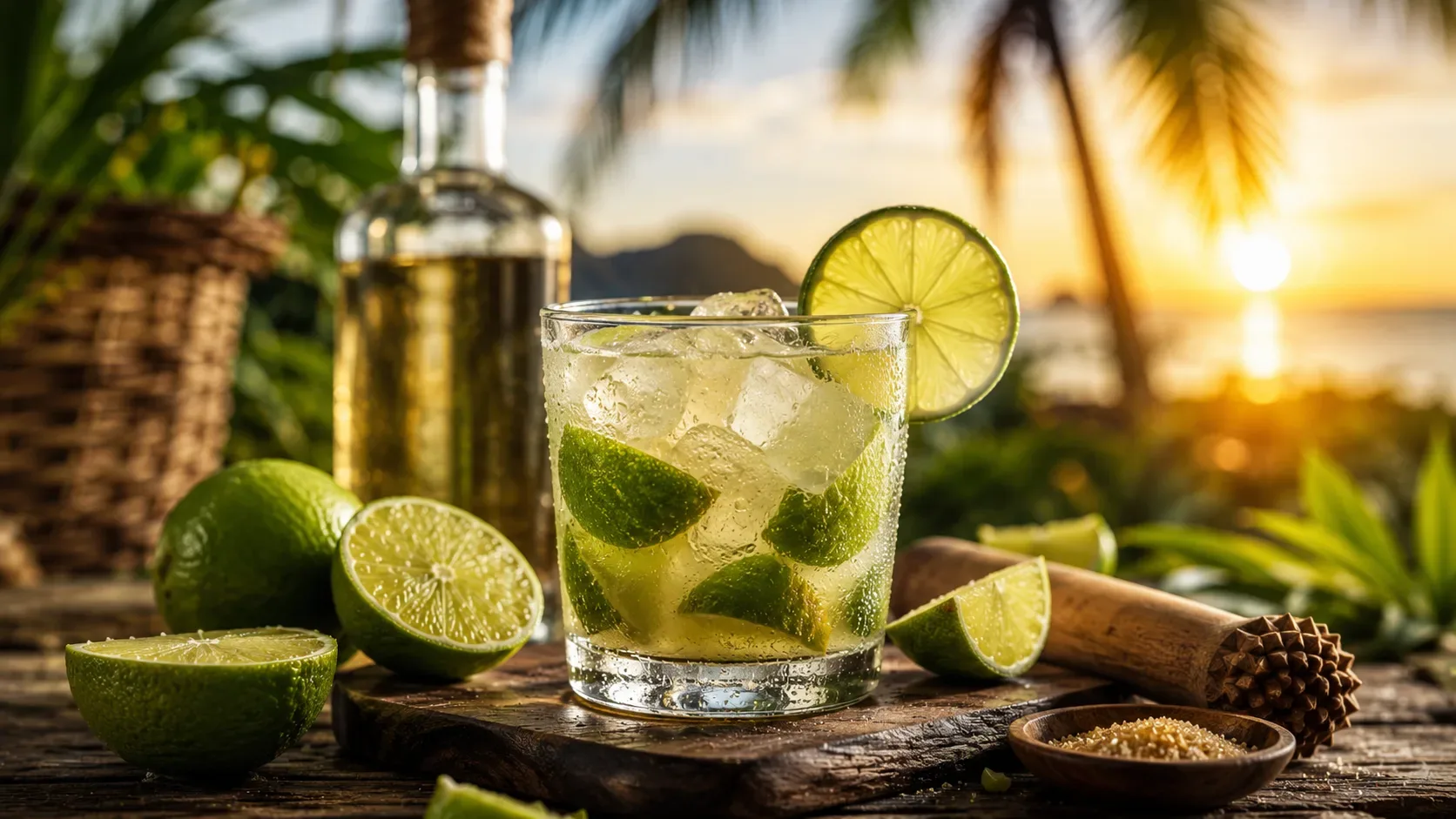
The origin of the caipirinha: between history and popular tradition
The history of the caipirinha has different versions, but the one most accepted by researchers of Brazilian gastronomy points to its origins in the interior of the state of São Paulo, especially in the sugar cane producing region, between the end of the 19th century and the beginning of the 20th century.
One of the most popular theories states that a mixture of lemon, garlic, honey and brandy was used as a home remedy against colds and flu during outbreaks of the Spanish flu in 1918. Over time, the recipe would have evolved, abandoning medicinal ingredients and incorporating sugar and ice, getting closer to the drink we know today.
Although it is difficult to determine an exact date or a single creator, there is a consensus that the caipirinha is deeply related to the cachaça culture and the rural regions of Southeastern Brazil.
How the caipirinha became a national symbol
The popularization of caipirinha occurred throughout the 20th century, following the growth in appreciation of cachaça as a genuinely Brazilian product.
Initially associated with rural environments, the drink conquered bars, restaurants and large urban centers. With the expansion of international tourism, it began to be presented as one of the main expressions of Brazilian culture, alongside elements such as samba, carnival and traditional cuisine.
Currently, the caipirinha is recognized throughout the world as Brazil's most emblematic cocktail and is present on drink lists in several countries.
The ingredients of the traditional caipirinha
Despite the countless variations, the classic recipe uses just four ingredients:
Cachaça
It is the main element of the drink. Produced from the fermentation and distillation of sugar cane juice, cachaça is one of the most traditional drinks in Brazil and responsible for the characteristic personality of the caipirinha.
Lemon
The lemon provides the acidity and freshness that balance the more intense flavor of the cachaça.
Traditionally, Tahitian lemon is used, cut into small pieces.
Sugar
Sugar helps reduce the acidity of the lemon and creates a balance between sweet and citrus.
The most commonly used type is crystal sugar, although other versions may use refined or demerara sugar.
Ice
Ice not only cools the drink, but also participates in dilution, making the drink more pleasant and balanced.
Traditional Brazilian caipirinha recipe
Ingredients
- 1 Tahiti lemon;
- 2 teaspoons of sugar;
- 50 ml of cachaça;
- ice to taste.
Stream mode
1. Prepare the lemon
Wash the lemon well, cut off the ends and divide it into smaller pieces. Remove the excess white central part, as it can make the drink more bitter.
2. Macerate with sugar
Place the lemon in the glass along with the sugar and gently crush with a muddler. The goal is to extract the oils and juice from the fruit without crushing the skin too much.
3. Add ice and cachaça
Fill the glass with plenty of ice, add the cachaça and mix gently until all the flavors are integrated.
The most famous variations of the caipirinha
Over time, the creativity of bartenders led to the emergence of new versions.
Caipiroska
Replaces cachaça with vodka, maintaining the same preparation principle.
Caipisake
Uses sake instead of cachaça, making it a very popular version in Brazil.
Caipifrutas
Uses fruits like:
- strawberry;
- passion fruit;
- kiwi;
- pineapple;
- grape.
Although these are much appreciated versions, the traditional caipirinha continues to be one prepared exclusively with cachaça, lemon, sugar and ice.
The importance of caipirinha for Brazilian culture
The caipirinha has surpassed the world of cocktails and has become a symbol of national identity.
It represents:
- the sugarcane tradition;
- the history of Brazilian cachaça;
- the country's gastronomic creativity;
- hospitality and the culture of social gatherings.
Its presence at international events, restaurants and bars around the world contributed to transforming the drink into a true ambassador of Brazilian culture.
The role of the caipirinha in global cocktails
Great international bartenders recognize the caipirinha as one of the most important classic cocktails in the world.
Its simple formula demonstrates one of the fundamental principles of good cocktail making: a few quality ingredients can create a complex experience of aromas and flavors.
Alongside historical drinks such as the Martini, the Mojito and the Old Fashioned, the caipirinha occupies a prominent place among the best-known cocktails on the planet.
Responsible consumption and beverage enjoyment
Despite its refreshing and easy-to-drink flavor, caipirinha is an alcoholic drink with a significant alcohol content due to the presence of cachaça.
Responsible consumption is essential for a safe and enjoyable gastronomic experience.
Conclusion
The caipirinha is much more than a mixture of lemon, sugar, ice and cachaça. It carries centuries of tradition linked to the history of sugar cane, the evolution of cachaça and Brazilian social habits.
Its simplicity is precisely what made it a global icon: a few ingredients, when well balanced, were able to create one of the most representative drinks of Brazilian culture.
From rural São Paulo to the most sophisticated bars on the planet, the caipirinha remains a true emotional heritage of national gastronomy.